New USV increases payload and capacity possibilities

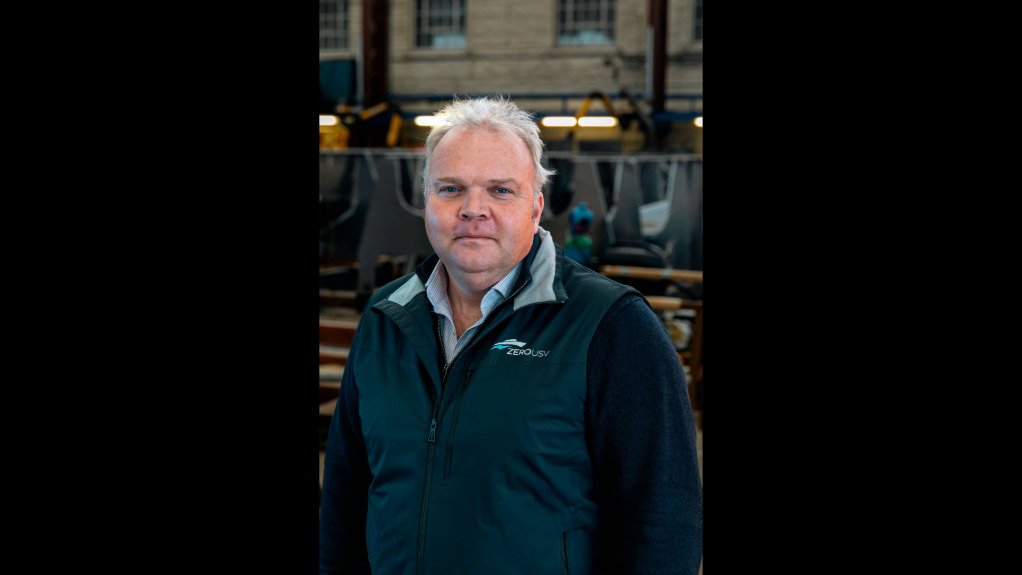
MATTHEW RATSEY At the end of the day, when USVs come in for servicing or maintenance, they’re still looked after by humans
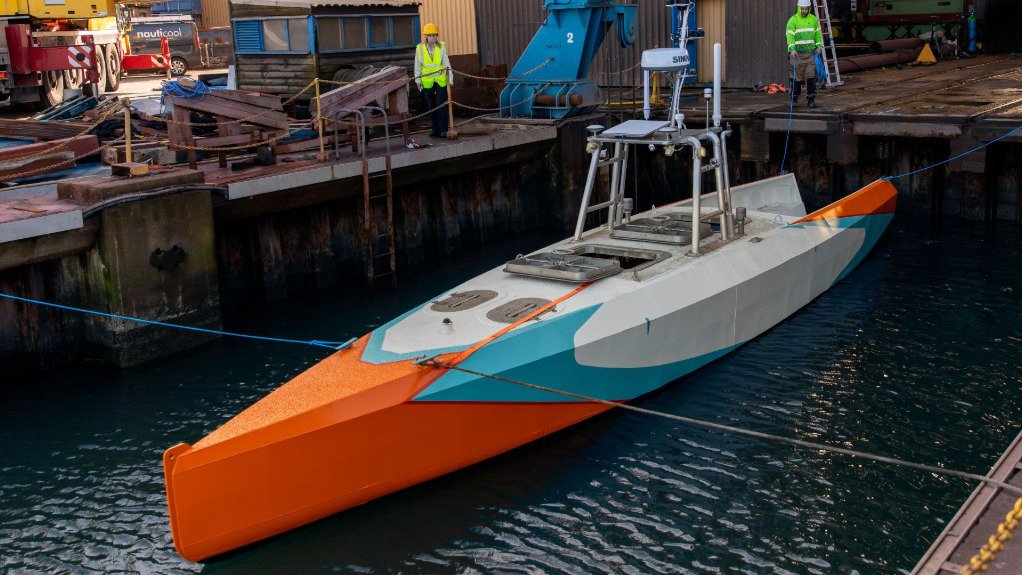
REMOTE TRANSIT The Oceanus 17 features a Level 4+ autonomy, allowing for remote-controlled harbour transits with fully autonomous missions controlled from a shore-based operations centre


A new class of large, long-distance, high payload uncrewed service vehicle (USV) – the Oceanus 17 – by marine automation company Zero USV, will enable the autonomous deployment of defence, offshore surveying and complex marine missions.
Set to launch in June 2026, the Oceanus 17 is a redesign of the Oceanus 12, using most of the same components, only rescaled to create the largest vessel possible, says Zero USV MD Matthew Ratsey.
“Size is key, certainly in the defence sector. Players in the sector prioritise size because that gives them, within reason, seaworthiness. However, these same metrics cannot be used on uncrewed vessels,” Ratsey explains.
Consequently, there were two principal changes between the designs of the Oceanus 12 and the Oceanus 17 – the payload and the range.
Launched in March 2025, the Oceanus 12, a 12 m USV, is limited to a payload capacity of 1 t, which ensures that it is still capable of doing multibeam survey work, and it can be equipped with a 150 m towed array sonar system and can launch sonobuoys, among other things.
The fuel range of the Oceanus 12 is 1 200 ℓ, and it lasts about 20 to 25 days at sea.
The Oceanus 12 also features 110 digital sensors and an additional 20 digital Acoustic Doppler Current Profilers, with server racks on board to store large volumes of data.
Rescaled Design
Unlike smaller vessels, larger vessels such as the Oceanus 17 are capable of launching recovery systems and therefore require an estimated payload of 2.5 t, which is “far too big” in terms of the physical weight and size of a 12 m vessel, states Ratsey.
Further, many navies prefer a vessel that can remain at sea for longer, with a minimum requirement being 50 days.
“The Oceanus 12’s engines were the only off-the-shelf, commercially-available units that fit the specifications, and when we initially tuned them, we did so to ensure that they wouldn’t reach their maximum capacity. As such, these engines, without our tweaking, were already suitable for the Oceanus 17.”
Ratsey notes that structurally, the Oceanus 17 uses a displacement hull with a keel that doubles both as a skin-tank cooling system and fuel structure for the generators.
Additionally, acting as a sensor-mounting strut, steel plates on the keel below allow multibeam sonars, sub-bottom profilers and towed array interfaces to be pre-mounted and bolted on, with pre-run conduits carrying power and data into the vessel.
Moreover, in the payload area, reinforced securing points, a longitudinal and traverse track system and an IP68-rated junction box provide power, ethernet and National Marine Electronics Association compliance, which facilitates the rapid reconfiguration of the vessel between roles, often in a matter of hours.
Designed to be uncrewed, the Oceanus 17 features the Level 4+ autonomy that was demonstrated on the Oceanus 12, allowing for remote-controlled harbour transits with fully autonomous missions controlled from a shore-based operations centre – while leveraging high-bandwidth, with an iridium backup, and extensive onboard storage to support real-time or bulk data delivery.
Looking ahead, Ratsey points out that Zero USV is a boat-building company that builds boats using an understanding of technology and how it can be applied; it does not comprise “tech people trying to build boats”.
“When technology developers try to build boats, they misunderstand or undervalue what is required to create and maintain a USV. At the end of the day, when USVs come in for servicing or maintenance, they’re still looked after by humans,” he states.
Ratsey notes that the USV industry has yet to reach the point where robots or automated solutions can repair or maintain the vessels when they return to shore.
As such, companies will need adequate space in harbours and ports to allow for ease of human maintenance
“We intend to be a long-time player in this market, and we believe we are at the leading edge of what is possible with USV technology, and our aspirations are to carry on being the leading force in the USV market, in both the defence and commercial sector,” he concludes.
Article Enquiry
Email Article
Save Article
Feedback
To advertise email advertising@creamermedia.co.za or click here
Research Reports

Projects

Latest Multimedia

Showroom

We supply customers with practical affordable solutions for their testing needs. Our products include benchtop, portable, in-line process control...
VISIT SHOWROOM
Columbus Stainless, based in Middelburg, Mpumalanga, is Africa’s only producer of stainless steel flat products. In addition, Columbus is the only...
VISIT SHOWROOM

Press Office
Announcements
What's On
Subscribe to improve your user experience...
Option 1 (equivalent of R125 a month):
Receive a weekly copy of Creamer Media's Engineering News & Mining Weekly magazine
(print copy for those in South Africa and e-magazine for those outside of South Africa)
Receive daily email newsletters
Access to full search results
Access archive of magazine back copies
Access to Projects in Progress
Access to ONE Research Report of your choice in PDF format
Option 2 (equivalent of R375 a month):
All benefits from Option 1
PLUS
Access to Creamer Media's Research Channel Africa for ALL Research Reports, in PDF format, on various industrial and mining sectors
including Electricity; Water; Energy Transition; Hydrogen; Roads, Rail and Ports; Coal; Gold; Platinum; Battery Metals; etc.
Already a subscriber?
Forgotten your password?
Receive weekly copy of Creamer Media's Engineering News & Mining Weekly magazine (print copy for those in South Africa and e-magazine for those outside of South Africa)
➕
Recieve daily email newsletters
➕
Access to full search results
➕
Access archive of magazine back copies
➕
Access to Projects in Progress
➕
Access to ONE Research Report of your choice in PDF format
RESEARCH CHANNEL AFRICA
R4500 (equivalent of R375 a month)
SUBSCRIBEAll benefits from Option 1
➕
Access to Creamer Media's Research Channel Africa for ALL Research Reports on various industrial and mining sectors, in PDF format, including on:
Electricity
➕
Water
➕
Energy Transition
➕
Hydrogen
➕
Roads, Rail and Ports
➕
Coal
➕
Gold
➕
Platinum
➕
Battery Metals
➕
etc.
Receive all benefits from Option 1 or Option 2 delivered to numerous people at your company
➕
Multiple User names and Passwords for simultaneous log-ins
➕
Intranet integration access to all in your organisation